
The Hidden Danger of PV Fires
PV Fires and the Case for Environmentally Responsible First Responder Solutions
As solar power continues to rise in popularity across South Africa and the world, so do the complex risks associated with photovoltaic (PV) systems—particularly during emergencies. While electrical safety and fire risks for first responders are well known, the environmental dangers of PV fires remain a largely overlooked issue.
In this article, we explore a critical yet under-discussed dimension: the release of hazardous nanoparticles and contaminants during PV fires, and how innovative tools like PVSTOP can help manage not only safety but also environmental cleanup.
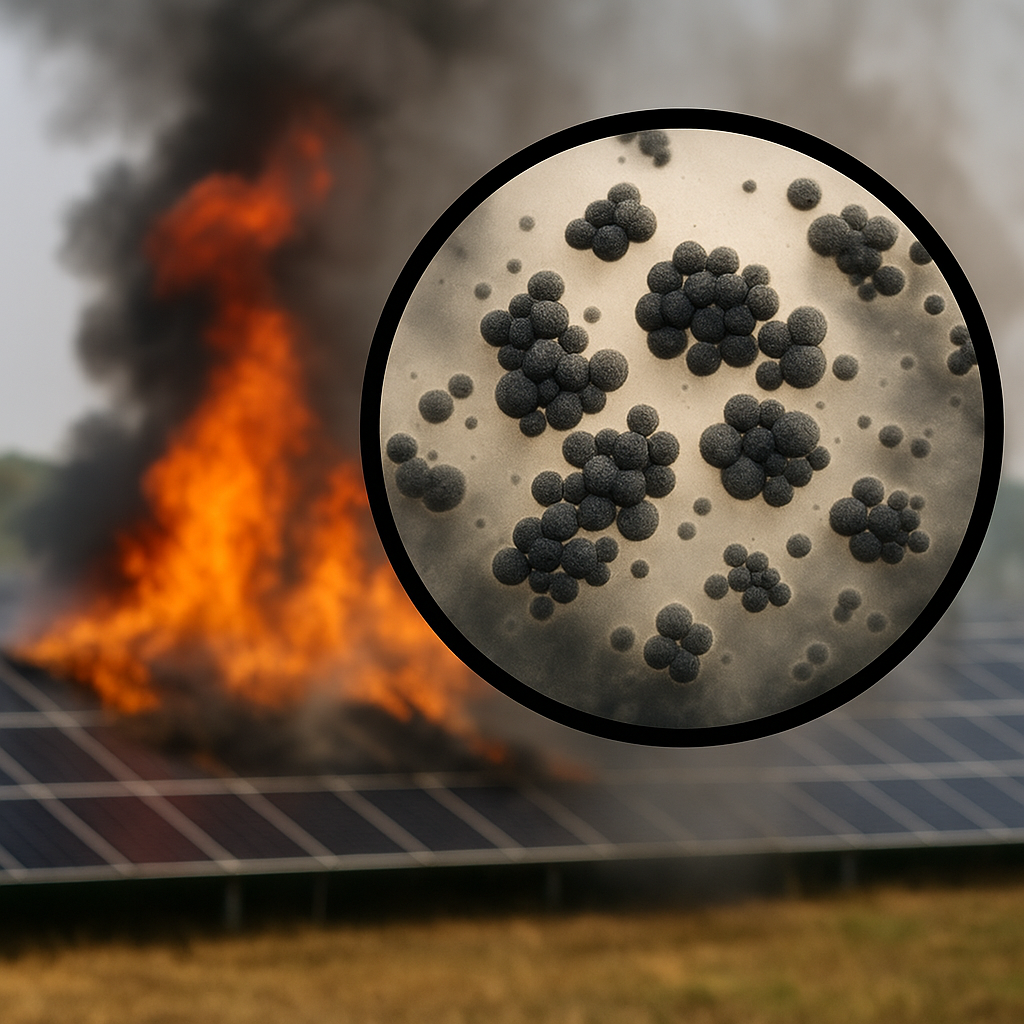
Nanoparticles from PV fires pose minimal risk in residential and substation systems, but commercial arrays may present higher health risks due to greater material volume and fire likelihood. To reduce exposure, residents within 1–2 km of a PV fire should be advised to remain indoors with windows closed until the area is declared safe by emergency authorities.
Why PV Fires Are an Environmental Threat
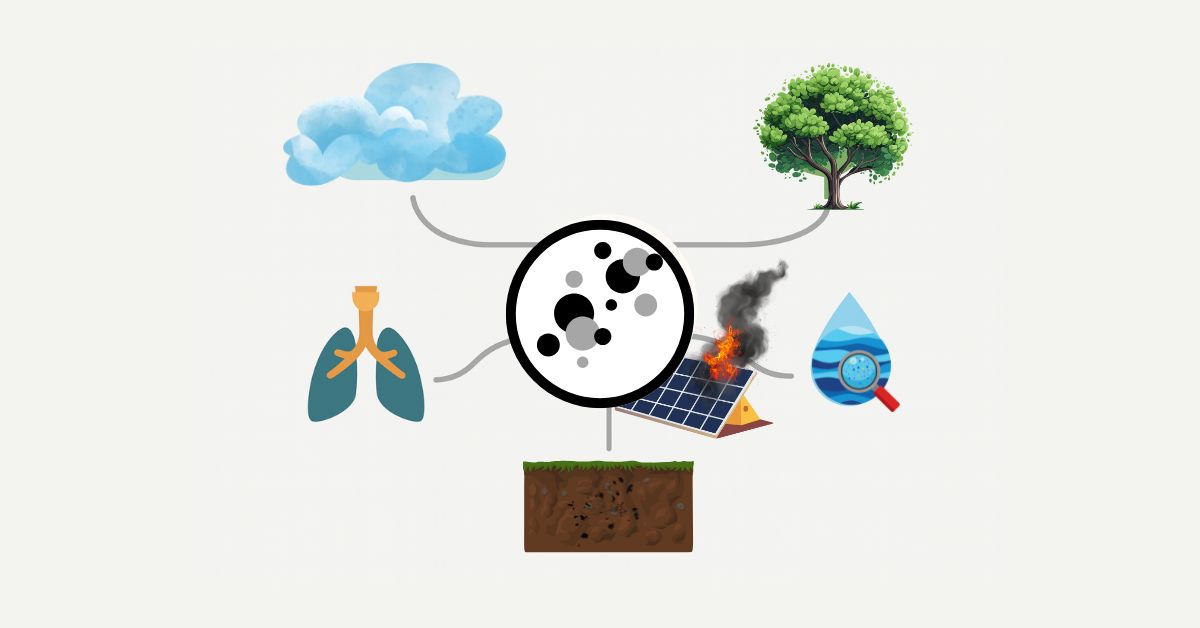
When PV modules catch fire, it’s not just the flames that pose a danger—it’s what’s released into the air, water, and soil.
Modern solar panels contain substances such as:
- Heavy metals (lead, cadmium, antimony)
- Silicon dust and nanoparticles
- Plastic encapsulants and fluoropolymers
In a fire, these materials can degrade and release:
- Toxic smoke and gases
- Nanoparticles and fine dust
- Contaminated water runoff from firefighting efforts
These substances pose serious environmental and health risks:
- Airborne particles can cause long-term respiratory harm to responders, nearby residents, and animals. Read more …
- Waterborne contaminants can infiltrate groundwater, rivers, or stormwater systems.
- Soil contamination can linger, affecting ecosystems and future site usage.
Yet, current PV fire protocols often fail to address these environmental hazards in any structured way.
How Does PVSTOP Help?
While PVSTOP is not a fire extinguisher, it plays a critical role in post-fire safety and environmental containment. Once the fire is under control and it is safe to approach the site, PVSTOP can be applied to damaged or burned PV panels.
1. Post-Fire Encapsulation
Once the fire has been extinguished and the PV system is de-energized, PVSTOP can be sprayed onto affected panels. It forms a non-toxic, fire-retardant polymer film over the PV surface. This seals in residual contaminants, including toxic nanoparticles and heavy metals, limiting further environmental exposure.
2. Environmental Containment
By encapsulating the surface of burned or cracked PV modules, PVSTOP helps prevent the release of harmful particles into the air, water, or soil—making the site safer not just electrically, but environmentally.
3. Preparation for Clean-Up and Decommissioning
With the contaminated debris safely contained, the site can be assessed, repaired, or demolished. This enables a structured and compliant clean-up process, aligned with environmental safety best practices.
4. No Risk of Re-ignition
PVSTOP is certified non-flammable (tested to Class A fire standards) and eliminates the possibility of panels re-energizing during or after the fire, preventing re-ignition risks during recovery operations.
Why First Responders and Environmental Authorities Should Care
South African fire departments, insurers, municipalities, and disaster risk agencies are increasingly encountering PV fires in residential, commercial, and industrial settings.
Incorporating PVSTOP into post-incident procedures gives them the tools to:
- Ensure full site de-energization
- Contain hazardous particles before cleanup
- Reduce environmental impact
- Minimize risk to personnel, communities, and ecosystems
Environmental agencies should also begin recognizing PV fires as hazmat events that require proper reporting, containment, and remediation.
Call to Action: Safety is Not Enough—We Must Think Sustainably
The future of solar energy is bright—but it must also be safe and sustainable. It is no longer enough to think about electrical isolation alone. We must plan for holistic safety, which includes:
- First responder protection
- Electrical de-energization
- Post-fire nanoparticle containment
- Environmentally safe decommissioning
LTV Technologies and Supplies, we are proud to work alongside environmental experts, engineers, and first responders to develop new standards and tools for PV safety. PVSTOP being a key part of that strategy.
Final Thought
PVSTOP is not just a safety spray—it’s a bridge between emergency response and environmental responsibility. It allows us to respond to PV fires in a way that respects both human life and the ecosystems we seek to protect.
As solar continues to power our homes and businesses, let’s ensure that our response tools and protocols are as smart, safe, and sustainable as the energy we generate.