Post page

Ensuring Fire Safety Awareness in Schools and Businesses with PV Systems

The Occupational Health and Safety Act (OHSA) of South Africa mandates specific procedures and guidelines to ensure safety during emergencies, including fires, at schools and businesses. While the OHSA does not provide a detailed step-by-step evacuation plan, it requires employers to implement and maintain safe working conditions, which include having an emergency action plan. Here are the key procedures generally required:

General Fire Safety Procedures

  1. Emergency Preparedness Plan:
    • Develop a comprehensive emergency preparedness plan that includes fire safety procedures.
    • Ensure the plan is easily accessible and communicated to all employees and students.
  2. Evacuation Plan:
    • Clearly mark all emergency exits and ensure they are free of obstructions.
    • Designate assembly points at a safe distance from the building.
    • Conduct regular fire drills to familiarize everyone with the evacuation routes and procedures.
  3. Fire Alarms and Detection Systems:
    • Install and maintain fire alarms and smoke detectors throughout the premises.
    • Ensure that alarms are audible and visible to alert all occupants.
  4. Fire Extinguishers and Firefighting Equipment:
    • Equip the building with appropriate fire extinguishers, and ensure they are easily accessible.
    • Train designated personnel in the proper use of firefighting equipment.
  5. Emergency Contacts and Communication:
    • Maintain an updated list of emergency contact numbers.
    • Ensure that communication systems (e.g., PA systems, radios) are functional and can be used during an emergency.
  6. Training and Drills:
    • Conduct regular fire safety training for all staff and students.
    • Organize regular fire drills to practice evacuation procedures.
  7. First Aid and Medical Response:
    • Have first aid kits readily available.
    • Train staff in basic first aid and emergency response.

Specific Guidelines for Solar PV Installations

Given the specific risks associated with solar PV systems, such as the presence of live DC wires even when the main power is shut down, additional precautions are necessary. Here are the guidelines:

  1. Risk Assessment:
    • Conduct a thorough risk assessment of the PV system to identify potential hazards.
    • Implement control measures to mitigate these risks.
  2. Signage and Labeling:
    • Clearly label all components of the PV system, including inverters and combiner boxes.
    • Post warning signs to indicate the presence of high voltage and live wires.
  3. PVStop or Similar Products: (If available)
    • Ensure PVStop or similar de-energizing products are available on the premises.
    • Train personnel in the proper use of these products to safely de-energize the PV system during an emergency.
  4. Isolation Procedures:
    • Develop procedures for safely isolating and shutting down the PV system.
    • Ensure that these procedures are part of the overall emergency action plan.
  5. Emergency Response Coordination:
    • Coordinate with the local fire department to develop a joint action plan for emergencies involving the PV system.
    • Provide the fire department with detailed information about the PV system layout and isolation points.
  6. Danger Zones:
    • Mark danger zones around PV installations where DC voltage is present.
    • Ensure that these areas are off-limits to untrained personnel during emergencies.
  7. Regular Inspections and Maintenance:
    • Conduct regular inspections of the PV system to ensure it is in good working condition.
    • Address any maintenance issues promptly to prevent potential hazards.

Example of a Fire Emergency Procedure for a School or Business with Solar PV System

  1. Immediate Actions:
    • Upon discovering a fire, immediately activate the nearest fire alarm.
    • Call emergency services and provide them with detailed information about the fire and any specific risks related to the PV system.
  2. Evacuation:
    • Evacuate the building using the nearest safe exit.
    • Avoid areas with marked danger zones related to the PV system.
    • Proceed to the designated assembly point.
  3. Using PVStop:
    • If safe to do so, trained personnel should use PVStop to de-energize the PV modules.
    • Inform the fire department upon their arrival about the use of PVStop and the current status of the PV system.
  4. Coordination with Fire Department:
    • Provide the fire department with the layout of the PV system and any specific isolation points.
    • Assist the fire department as needed, ensuring they are aware of the live DC hazards.
  5. Post-Emergency Actions:
    • Conduct a headcount at the assembly point to ensure everyone is accounted for.
    • Do not re-enter the building until it has been declared safe by the fire department.

By following these procedures and guidelines, schools and businesses can enhance their preparedness for fire emergencies, particularly those involving the unique hazards of solar PV systems. Regular training, clear communication, and coordination with emergency services are key components of an effective fire safety plan.

Disclaimer

This document is provided solely for awareness purposes and should not be considered a comprehensive action plan for emergency preparedness and response. While it outlines general guidelines and procedures, it is crucial to consult with and involve the appropriate authorities and professionals to develop a detailed and compliant emergency action plan tailored to your specific needs.

We strongly recommend contacting your organization’s safety officers, local fire department, emergency response teams, and other relevant authorities to ensure that your emergency procedures comply with all legal and safety requirements. Professional advice and regular updates are essential to maintain an effective and compliant safety strategy.

For specific guidance and to ensure full compliance with the Occupational Health and Safety Act (OHSA) of South Africa, as well as best practices for handling emergencies involving solar PV systems, please consult with qualified safety professionals and regulatory bodies.

Contact Information and sudgestions for Compliance and Safety Support:

By following professional advice and involving the appropriate authorities, you can ensure that your emergency action plan is comprehensive, effective, and compliant with all relevant safety standards and regulations.

Enhancing Property Safety: Introducing PVStop’s Innovative Solution

At PVStop, we’re dedicated to safeguarding your properties with innovative solutions that prioritize safety above all else. Today, we’re thrilled to introduce you to a game-changing product that could revolutionize how we protect our homes and businesses from solar panel fires.

PVStop is not just another safety product; it’s a solution meticulously designed to address the unique risks posed by solar panel fires. Unlike traditional approaches, which often fall short in fully mitigating these risks, PVStop offers a comprehensive solution that effectively de-energizes PV panels, preventing re-ignition and minimizing damage.

Solar panels can continue to produce dangerous power levels during emergencies, creating a hazardous environment that poses significant electrocution risks. In such critical situations, the rapid application of PVStop can make all the difference, potentially saving lives and properties.

Recognizing the importance of accessibility, we’re excited to announce new rental options for our customers. This not only makes PVStop more affordable but also ensures that safety remains a top priority. With rental terms of 36 months, aligning with our recommended usage period, customers can now have peace of mind knowing they have access to this crucial emergency solution when needed.

But our commitment to safety doesn’t stop there. We’re actively reaching out to insurance companies, recognizing the immense benefits that PVStop brings to the industry. By collaborating with insurers, we aim to make PVStop readily available on-site, enabling clients to respond swiftly to emergencies and ultimately reducing the frequency and severity of claims related to solar panel fires.

We understand that collaboration is key to achieving our goals, and we’re eager to work closely with insurance companies to explore this opportunity further. If you’re an insurance professional interested in enhancing safety measures within the solar energy industry, we invite you to join us in this endeavor.

Together, we can make a significant impact on property safety, one PVStop at a time.

PV Safety Webinar Recap and Access to Recording! December 2023

We’re delighted to share some highlights and resources from our recent webinar, “PV Safety – Risk and Solutions for First Responders,” hosted by PVStop International in collaboration with esteemed presenters, Jim Foran, Director (Australia), and Alex Keene, European Sales & Marketing Manager.

Key Takeaways:

  • The webinar shed light on the critical importance of safety in the fast-growing PV industry.
  • Emphasis on adherence to regulations and standards for secure PV system installations.
  • Identification and mitigation of potential risks, both in direct fire scenarios and situations indirectly involving solar panels.
  • Insightful discussions on the role of first responders in addressing incidents related to PV systems swiftly and safely.

Special Thanks: We extend our heartfelt gratitude to Jim Foran and Alex Keene for their valuable insights and expertise. Their contributions made the webinar both informative and engaging.

Access to Recorded Webinar: For those who couldn’t join us live or wish to revisit the valuable content, we’ve made the recorded webinar available. Simply follow this YouTube link to access the full session at your convenience.

Acknowledgment to Attendees: A sincere thank you to all attendees who actively participated in the webinar. Your commitment to safety and engagement in this critical dialogue is essential for creating a safer environment within the PV industry.
We look forward to your continued interest and participation in future webinars. If you have any questions or suggestions for topics you’d like us to cover, please don’t hesitate to reach out.
Stay tuned for more exciting updates and advancements in the world of PV technology!
Calculating consequences matters more than counting PV fires (for now)

When people talk about solar-PV fire risk, the first question is almost always:

“But how many PV fires are there really?”

It sounds reasonable and scientific. Insurers want loss data. Fire services want incident statistics. Policy-makers want trend graphs before they move.

The problem is simple and brutal: for PV fires, the data we have today is full of holes by design. If you wait for “perfect statistics” before you act, you are effectively choosing to stay blind.

That’s why a consequence-based approach is not just useful – it’s essential. For the next few years, calculating consequences of a PV fire at a given site will often tell you more than any national database can.

1. Why today’s PV fire data can’t be trusted on its own

In most countries (including South Africa), PV fire statistics are weak for structural reasons, not because PV is magically safe.

1.1 PV isn’t tagged properly in incident systems

Fire incident reporting systems were not built with PV in mind. A typical form might have:

  • “Electrical fire”
  • “Roof fire”
  • “Equipment fault”

…but no dedicated tick-box for “solar PV present” and no way to mark “PV suspected as ignition source”.

So even when a fire service attends a real PV-driven roof fire, the database might record it as:

“Electrical – other” in a normal building fire.

The PV disappears into the noise. When you later pull national stats, PV almost doesn’t exist – not because it isn’t burning, but because it was never labelled.

1.2. Near-misses are almost invisible

The most important signals in a complex system are often not the disasters, but the “almost disasters”:

  • DC connectors that melted but didn’t ignite timber
  • DC isolators that smoked and were quietly replaced
  • Combiner boxes that showed scorch marks or arc damage
  • Cable damage found on thermography inspections

These events rarely go into a central, searchable system. An installer might fix them. An O&M contractor might log them locally. An insurer might never hear about it.

From a risk perspective, these near-misses show you how often the system tries to fail. From a data perspective, they are mostly invisible.

1.3. No regulatory or contractual duty to report

In most markets, no standard regulation or insurance condition tells people clearly:

  • “If a PV component fails or nearly ignites, you must report it to X, and they must record it like this.”

Without that, everyone assumes someone else is tracking the problem. Result:

  • Installers fix and move on
  • Owners claim under “electrical”
  • Fire services fight the fire and close the file

You end up with national statistics that say “PV fires are rare”, but only because nobody asked the PV question on the form.

1.4. Rapid rollout + mixed quality = hidden risk

Most countries have seen a rapid, sometimes chaotic rollout of rooftop PV:

  • Highly variable installer competence
  • Grey-market components and poor QA
  • Limited inspections or enforcement
  • Harsh climate and rooftop environments

All of these increase the underlying defect and ignition risk, but not the recorded risk. The more we install without proper tracking, the bigger the gap between “what’s in the database” and “what’s happening on roofs”.


2. The actuarial trap: waiting for numbers that can’t exist

Insurers and policy-makers are used to a world where:

“We’ll act when the data is strong enough.”

For PV fire risk, that mindset becomes a trap:

  • The system isn’t designed to see PV risk
  • So the statistics show almost nothing
  • So nobody justifies the cost of better controls
  • So the system remains blind

It’s a closed loop of inaction.

In that situation, chasing perfect frequency data is less useful than asking a different question:

“If this PV system did catch fire, what would the consequences be?”

That question you can answer today, very clearly and very locally, without pretending to have national-level fire curves.


3. Consequence-based thinking: what it actually means

When we talk about “calculating consequences”, we’re not hand-waving. We’re doing structured, repeatable assessment along three dimensions:

  1. People (P) – impact on life and health
    • Could anyone realistically be injured or killed?
    • How many people, how vulnerable, how complex is evacuation?
    • What about the firefighters under that live DC roof?
  2. Assets (A) – damage to property and equipment
    • What could be destroyed?
    • A few panels and some sheeting, or an entire roof and all stock below it?
    • Are there high-value assets: machinery, switchgear, archives, servers?
  3. Business / Service (B) – impact on operations
    • How long would operations or services be interrupted?
    • Is this a warehouse, a small office, a school, a hospital, a data centre?
    • Would the community lose an essential service?

In practice, you score each 1–5 (low to very high) and combine them into a Consequence score C (1–5) with clear rules and a strong bias toward life safety.

The exact maths can vary, but the essence is:

  • People dominates the score
  • Assets and service disruption refine the picture
  • You end up with a consistent, transparent “how bad could it be here?” number

This is not guesswork. It’s structured engineering judgement, based on building type, layout, occupancy, construction, and what sits under the modules.


4. Why consequence matters more than incomplete PV fire data

4.1. Consequence tells you where you cannot afford to be wrong

Imagine two roofs:

  1. A small farm shed with a 5 kW array over non-combustible sheeting, rarely occupied.
  2. A hospital ICU ward with a dense array over combustible roofing, full of oxygen, cables and vulnerable patients.

National statistics might show “very few PV fires”. But if we are honest:

  • A PV fire on the shed is unfortunate.
  • A PV fire on the ICU is catastrophic.

The consequence is completely different, even if the likelihood of an ignition event is similar.

So as a fire service, insurer or risk manager, which one keeps you awake at night? The ICU, every time.

Consequence-based scoring forces you to prioritise the sites where being wrong has the highest price, regardless of how incomplete the fire database still is.

4.2. Consequence is local and knowable today

You don’t need ten years of perfect incident data to know:

  • This school’s only escape route is under a live array.
  • This warehouse holds flammable stock under a massive DC field.
  • This clinic’s emergency power is critical for patient survival.

Those are site facts, not statistics. You can inspect them, document them, and score them now.

4.3. Consequence guides sensible, targeted controls

Once you understand C (the consequence), you can tailor your effort:

  • High-consequence sites (hospitals, malls, big schools, critical infrastructure):
    • Clear shutdown / de-energisation methods
    • Stricter design standards and component choices
    • More frequent inspections and thermography
    • Mandatory, PV-specific firefighter SOPs and tools
  • Lower-consequence sites (small standalone sheds, remote carports):
    • Proportionate requirements, fewer bells and whistles
    • Lower inspection frequency

You get more safety per Rand spent, because you are not treating every roof like an ICU, and you are not pretending that all roofs are equally harmless.


5. Where likelihood still fits in (and how we use data honestly)

None of this says that frequency data is useless. It’s just not ready to drive decisions on its own.

The mature way to think about PV fire risk is:

Risk = Likelihood × Consequence

  • Consequence (C) you can score reliably today using a structured framework (People, Assets, Business).
  • Likelihood (L) you derive from technical risk factors:
    • DC connectors and isolators
    • Workmanship quality
    • Array design
    • Environmental exposure
    • Maintenance and inspection regime

As we improve data capture — better incident tags, near-miss reporting, insurance flagging — the L side can be refined using real numbers:

  • “Connectors of type X, in climate Y, with age Z, show this failure rate.”

But we don’t have to sit on our hands while we wait for that future. We can act now on high-consequence sites based on what we already know about fire behaviour, building use, and PV failure modes.


6. The practical message for decision-makers

If you’re an insurer, a fire service, a facilities manager or a regulator, the takeaway is simple:

  1. Accept that current PV fire stats are under-reporting by design.
    The lack of numbers does not equal lack of risk.
  2. Start evaluating consequence at site level.
    Use a transparent 1–5 scale for People, Assets and Business / Service, and combine them into a single Consequence score.
  3. Prioritise high-consequence roofs and systems now.
    These are the ones where a single PV-initiated fire can produce deaths, huge losses or public scandal.
  4. Improve data in parallel, not first.
    Add PV tick-boxes to incident reports, encourage near-miss reporting, and ask insurers to flag PV-related claims — but don’t wait for the perfect dataset before you move.
  5. Use the formula, but respect the reality.
    Risk = Likelihood × Consequence. Right now, Consequence is the side we can measure best. Use it.

Final thought

In a world where the PV fire dataset is full of holes, insisting on “perfect numbers” before taking PV safety seriously is like refusing to wear a seatbelt until you’ve personally reviewed every crash report in the country.

We already know enough to see where a PV fire would be devastating.

Consequence-based assessment simply forces us to admit it — and act accordingly.

Contact you PVSTOP Tecnical partner today

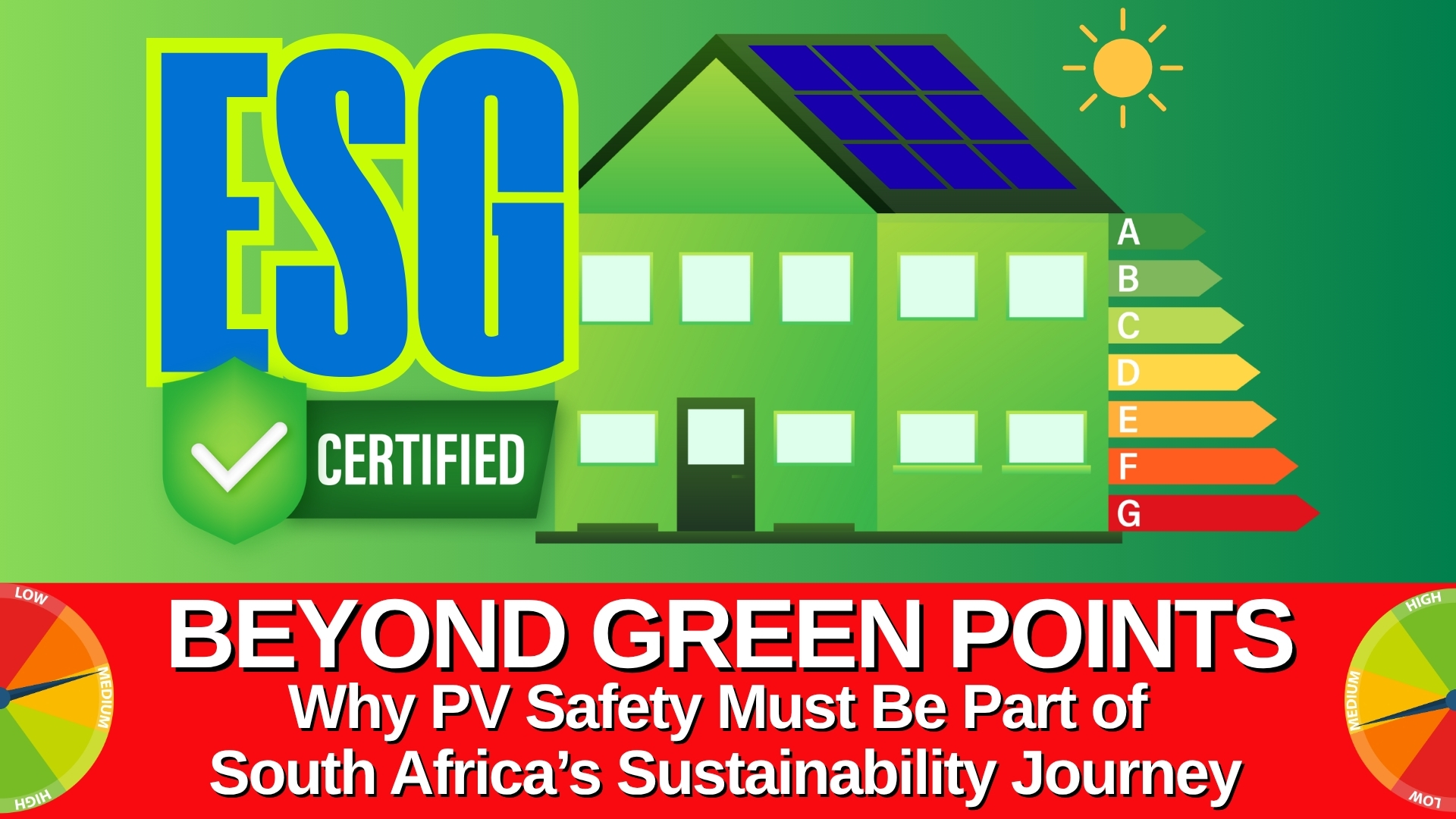
ESG-certified green building illustration with solar panels and energy rating chart, promoting PV safety and sustainability in South Africa.
ESG Beyond the Green Points

Why PV Safety Must Be Part of South Africa’s Sustainability Journey

Published by: PVStop South Africa
Author: Johan Bosman – CEO, LTV Technologies & Supplies / Civitas Risk Control


The Hidden Gap in South Africa’s Green Building Movement

South Africa’s renewable energy transition is accelerating. Thousands of buildings are installing solar PV systems to reduce electricity costs and meet Environmental, Social & Governance (ESG) targets. But as the race for “green points” continues, a crucial question remains unanswered:

Who is managing the risks that come with solar power?

While ESG frameworks reward the adoption of clean technologies, they often overlook the safety, maintenance, and lifecycle risks introduced by photovoltaic (PV) systems. A sustainable building isn’t just one that produces clean energy — it’s one that can also prevent loss, protect life, and ensure operational continuity when things go wrong.

The Current Compliance Landscape

Under the National Energy Act (Act 34 of 2008), the South African government requires all qualifying non-residential buildings to display and submit Energy Performance Certificates (EPCs). These certificates measure a building’s energy consumption (kWh/m²/year) and form part of the country’s broader ESG reporting drive.

However, EPC regulations focus purely on energy efficiency, not risk mitigation. They do not assess:

  • Fire and electrical risks associated with live PV systems;
  • The ability to de-energize panels during emergencies;
  • Safe roof access, walkway grip, or working-at-heights conditions;
  • Environmental impact from chemical or water-intensive cleaning;
  • Ongoing maintenance and inspection governance.

This creates a major gap between compliance and safety — a gap that forward-thinking building owners can now close.

ESG: More Than Energy — It’s About Responsibility

ESG frameworks were never meant to be limited to energy efficiency.
Each ESG pillar calls for deeper responsibility:

PillarIntended PurposeCurrent Gaps in PV ContextSolutions from LTV Technologies & Civitas Risk Control
EnvironmentalReduce carbon footprint and protect natural resourcesNo oversight on PV fire risk, chemical runoff, or unsafe disposalPVStop prevents PV fires and contamination;
Fire-Retardant Coatings add fire protection barriers
SocialProtect people and communitiesRoof workers, firefighters, and occupants face constant DC voltage hazardsEvacuPlan defines DC Danger Zones and safe evacuation procedures
GovernanceEnsure ethical, transparent, and compliant operationsNo formal PV safety or maintenance governanceArcBox and PASRAM (in development) establish standards and inspection protocols

True ESG alignment requires acknowledging that you can’t switch off the sun — and that solar safety must be part of every sustainability strategy.

Introducing Practical ESG-Aligned PV Safety Solutions

LTV Technologies & Supplies, together with Civitas Risk Control, deliver a suite of Tier-1 safety products and compliance tools designed to close this ESG gap:

  1. PVStop® – A patented, Class 0-certified solar panel coating that safely de-energizes live PV systems during fire or flood events, protecting responders and assets.
  2. ArcBox® / Viridian Solutions – Engineered to prevent DC connector arcing, one of the most common causes of PV-related fires.
  3. EvacuPlan™ – A digital and physical evacuation planning system that identifies DC danger zones and guides safe emergency response actions.
  4. Fire-Retardant Coatings – Adds an extra layer of structural protection between PV arrays and the roof surface.

Together, these technologies form a complete PV risk mitigation framework, enabling building owners, engineers, and insurers to demonstrate responsible ESG practice.

Why This Matters for Insurers, Engineers, and Property Owners

Insurers are increasingly linking ESG risk to underwriting and premiums.
By integrating PV safety and lifecycle governance into your building operations, you not only comply with the Energy Performance Certificate regulations — you also:

✅ Strengthen your ESG and insurance readiness
✅ Reduce liability for PV-related fire and safety incidents
✅ Improve your long-term building valuation and asset resilience
✅ Align with international best practice and reporting standards

Final Word

“True sustainability isn’t just clean — it’s safe.”

As South Africa moves toward mandatory ESG and EPC compliance, building owners have a unique opportunity to lead the next evolution of responsible energy.
By partnering with LTV Technologies, Civitas Risk Control, and PVStop South Africa, you can transform your PV system from a compliance checkbox into a verified, risk-managed, ESG-aligned asset.


Suggested Section to Add at the End of the Article

You can title it:

Further Reading & Regulatory References

To understand how PV safety and ESG compliance intersect, explore these key resources that shape South Africa’s sustainable building and energy safety framework:

  • Government Gazette No. 43972 (Notice 700 of 2020)
    Regulations for the Mandatory Display and Submission of Energy Performance Certificates for Buildings under the National Energy Act (34 of 2008).
    View on Government Printing Works
  • National Energy Act, 2008 (Act No. 34 of 2008)
    Defines South Africa’s national energy efficiency and management framework, but currently lacks detailed risk mitigation requirements for PV systems.
    Read summary on Energy.gov.za
  • Occupational Health and Safety Act, 1993 (Act No. 85 of 1993)
    Provides for safe working environments and can be extended to include safe access to PV roofs, anchor points, and fire safety training.
    See Department of Employment & Labour
  • SANS 10400-T: Fire Protection Regulations for Buildings
    Governs fire safety and evacuation planning but does not yet address the presence of active PV systems during fires.
    (SABS Standard, available from sabs.co.za)
  • CIPC ESG Disclosure Requirements (2025 Rollout)
    South Africa’s new ESG disclosure rules will make environmental and safety data mandatory for reporting entities.
    Learn more on CIPC’s ESG page

These regulations form the foundation of compliance — but together they reveal a missing link: PV risk mitigation and lifecycle safety.
PVStop, ArcBox, and EvacuPlan are designed to bridge that gap and bring ESG accountability to the solar industry.

PV Fire Risk: Insurance Compliance in South Africa

Across South Africa’s fast-growing solar industry, the fire risk associated with photovoltaic (PV) installations remains one of the most misunderstood aspects of both building compliance and insurance liability. While fire departments operate under the Fire Brigade Services Act (No. 99 of 1987), insurers and property owners share parallel obligations under the Occupational Health and Safety Act (No. 85 of 1993), the National Building Regulations and Building Standards Act (No. 103 of 1977), and the National Environmental Management Act (No. 107 of 1998) to manage these evolving hazards responsibly.

The Compliance Context

Under Section 8 of the OHS Act, employers and property owners are required to identify and mitigate foreseeable risks, including electrical and fire hazards introduced by PV systems. Similarly, SANS 10400-T (Fire Protection) stipulates that any building modification, such as a rooftop solar installation, must maintain adequate fire resistance, access, and suppression measures.

The Fire Brigade Services Act, through Sections 8, 9, and 15, empowers fire authorities to act on risks and salvage property at risk, it also expects proactive prevention. Insurers, meanwhile, rely on the same statutory framework to evaluate reasonable practicability and due diligence in risk management, particularly when assessing claims arising from PV-related fires.

Insurance Exposure and Risk Alignment

In the insurance sector, PV fire incidents represent a critical overlap of electrical, structural, and environmental liability. Conventional firefighting often results in secondary water and electrical damage, extensive claim delays, and environmental contamination. These outcomes directly affect underwriting exposure, claims settlement timelines, and reputational risk.

Leading South African insurers — including Santam, Hollard, King Price, and Old Mutual Insure — already assess renewable energy risks under combined fire and engineering policies. However, many policies are yet to fully reflect the specific challenges posed by live DC systems during fires. Products like PVSTOP offer a practical solution that enables both risk mitigation and regulatory compliance by safely encapsulating live PV modules to de-energize them during emergencies.

Regulatory Integration and ESG Compliance

PVSTOP aligns directly with multiple South African statutes and standards:

  • Fire Brigade Services Act (99/1987) – Recognised as “equipment” for fire prevention (Sec. 1(vii), Sec. 15).
  • Occupational Health and Safety Act (85/1993) – Supports hazard identification and mitigation duties (Sec. 8).
  • National Building Regulations – SANS 10400-T – Contributes to compliance with fire protection and access requirements.
  • Disaster Management Act (57/2002) – Aids preparedness and response at municipal level.
  • National Environmental Management Act (107/1998) – Prevents toxic runoff through non-hazardous, encapsulated nanoparticles.

By integrating PVSTOP into loss prevention protocols and underwriting frameworks, insurers can demonstrate alignment with national legislation, environmental stewardship, and ESG mandates increasingly demanded by both investors and global reinsurers.

The Case for Insurer Adoption

For insurers and risk engineers, recommending or requiring PV fire-mitigation systems is no longer a peripheral measure, it is a demonstrable act of compliance and prudent underwriting. Incorporating PVSTOP within insurer-approved risk-control lists delivers measurable benefits:

  • Reduces fire spread, reignition, and secondary damage
  • Accelerates site clearance and claim processing
  • Minimises business interruption and income loss
  • Provides proof of compliance with national safety regulations
  • Strengthens insurer credibility in sustainability and ESG reporting

South Africa’s legal framework already supports the proactive use of PV fire-mitigation products. What is now required is alignment between insurers, risk assessors, and emergency services to close the compliance gap.

By integrating PVSTOP into their underwriting and loss-control policies, insurers not only reduce claims exposure but also uphold their duty to promote safety, environmental responsibility, and resilience across the renewable-energy sector.


Understanding PV Fire Hazards: A Simple Explanation

Direct Current (DC) power — generated by solar panels — behaves differently from the alternating current (AC) used inside buildings.
When sunlight hits a solar panel, electricity flows immediately and continuously through DC wiring, even if the system is switched off. Unlike AC power, which alternates direction and can be interrupted by circuit breakers, DC current flows in one constant direction and can continue to arc and sustain a fire if not properly isolated.

This means that during a building fire, as long as sunlight reaches the panels, the PV system remains live and dangerous. Conventional extinguishers or water cannot safely neutralize this energy source.
PVSTOP works by coating the solar modules with a special non-conductive film that blocks light from reaching the photovoltaic cells — effectively cutting off the source of power generation at its origin. Once the “sunlight source” is eliminated, the DC current stops, allowing responders and insurers to safely manage the fire scene, prevent reignition, and protect property and personnel.


Key Definitions for Non-Technical Readers

DC (Direct Current):
A continuous flow of electric charge in one direction, produced by solar panels whenever sunlight is present. Unlike AC, it cannot be switched off easily and remains energized during daylight and light.

AC (Alternating Current):
The standard form of electricity used in homes and offices, which changes direction rapidly and can be safely interrupted by circuit breakers.

Mitigation:
Any proactive step taken to reduce the severity or likelihood of an incident. In fire safety, mitigation includes systems or materials designed to limit fire spread, heat, or ignition.

ESG (Environmental, Social, and Governance):
A framework used by investors and insurers to evaluate the sustainability and ethical impact of an organization.

  • Environmental considers ecological responsibility and pollution prevention.
  • Social focuses on safety, fairness, and community well-being.
  • Governance examines accountability and ethical management practices.
    Insurers increasingly integrate ESG performance into underwriting and risk-assessment policies.

Reasonably Practicable (OHS Act Term):
A legal standard under Section 8 of the OHS Act that requires employers and property owners to take all steps that are feasible, given the risk level and available technology, to prevent harm.

Fire Re-Ignition:
When a fire that appears extinguished flares up again due to residual heat or live electrical current — a major risk in PV systems if DC power remains active.

Non-Conductive Coating:
A specialized layer or spray that does not carry electricity, used to insulate live equipment or prevent electric current flow — the principle behind PVSTOP’s light-blocking safety application.

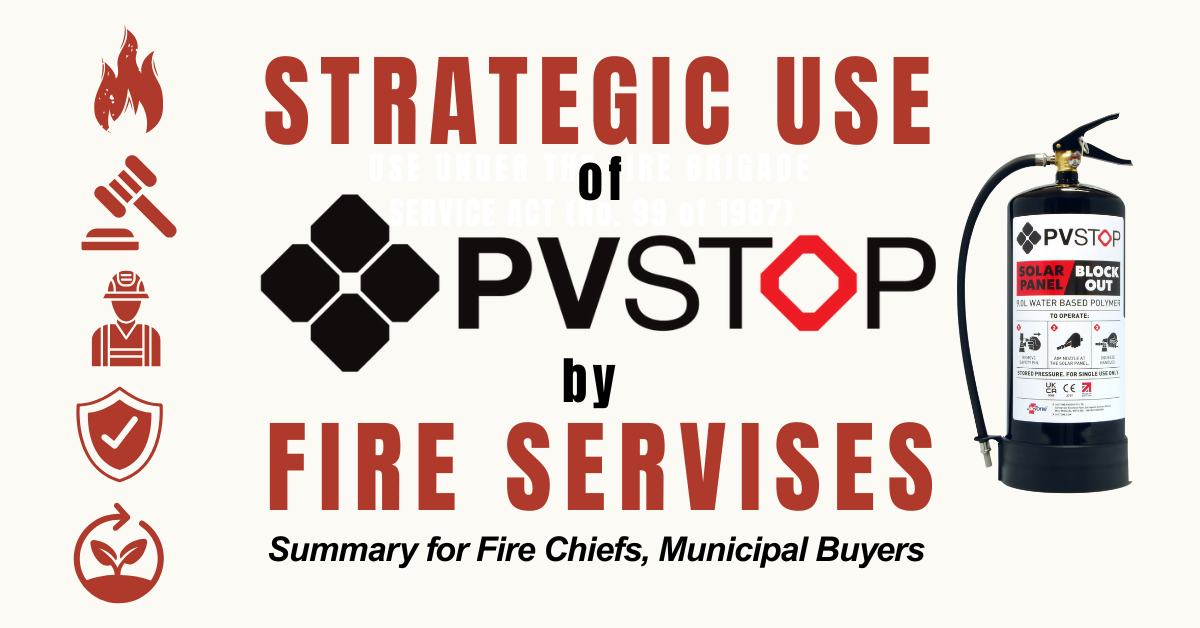
PVSTOP® and South Africa’s Fire Brigade Services Act (No. 99 of 1987)

Legal, Environmental & Procurement Alignment for Safer Solar Fire Response

PVSTOP® is the world’s only patented, spray-on solar panel deactivation solution — designed to help firefighters and emergency services rapidly isolate live solar PV systems during emergencies. With South Africa’s exponential growth in solar installations, the need for DC-side safety tools has become critical.

But more than just a breakthrough safety product, PVSTOP is now fully aligned with South African legislation, certified to international standards, and ready for compliant public-sector procurement.


Why Solar Fires Require a New Category of Firefighting Equipment

When solar panels are exposed to light, they remain energized — even if the inverter is off or the building is disconnected from the grid. Traditional methods like water or foam are not only ineffective, but dangerous, especially for first responders.

PVSTOP creates a non-destructive, removable barrier that blocks light instantly — safely shutting down panel output and preventing reignition or electrocution. This has made it essential for:

  • Firefighting and first response teams
  • Disaster and risk management units
  • Industrial PV safety compliance
  • OEM and insurance-aligned safety plans
Compliant, safe solar fire response with PVSTOP® in South Africa. Fire Act 99 of 1987, Section 36 SCM, BSI-certified. Municipal SOP ready.

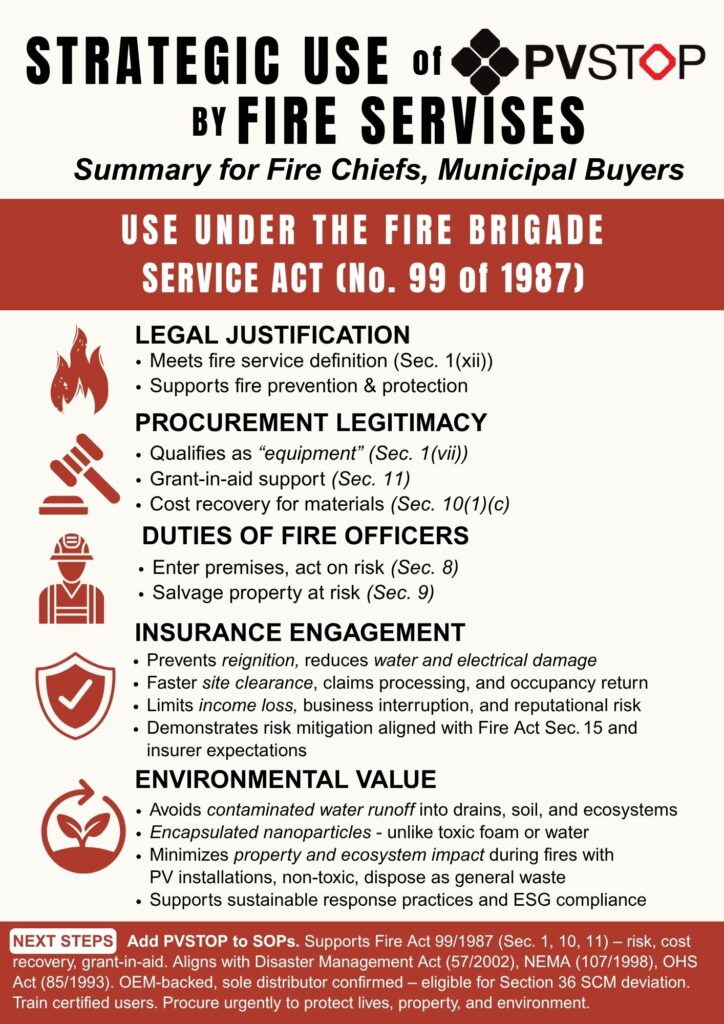
Legal Compliance Under the Fire Brigade Services Act (No. 99 of 1987)

PVSTOP’s deployment is supported by multiple sections of South Africa’s core fire safety legislation:

Relevant SectionLegal Reference
Section 1(xii)PVSTOP meets the legal definition of a “fire service” tool for prevention and property protection
Section 1(vii)PVSTOP qualifies as “equipment” used by a fire service
Section 10(1)(c)Cost recovery allowed for materials used during fire response
Section 11Eligible for municipal grant-in-aid support
Sections 8 & 9Supports powers of fire officers to neutralize danger and salvage property

In other words, PVSTOP is legally justified, operationally relevant, and financially recoverable.


OEM Confirmation & Section 36 SCM Procurement

PVSTOP International Pty Ltd (Australia) has formally appointed LTV Technologies & Supplies (Pty) Ltd as the sole and exclusive distributor of PVSTOP in South Africa. The appointment qualifies for procurement under:

Section 36(1)(a)(ii) of the Municipal SCM Regulations —
Deviation from competitive bidding is allowed where a product is available from a single provider only.

Civitas Risk Control (Pty) Ltd serves as the operational entity for training, technical deployment, and traceability — ensuring certified usage by public sector and emergency services personnel.

Full OEM confirmation letter and credentials available on request.


Safety Certifications – Cylinders & Formulation

Every PVSTOP unit supplied in South Africa is filled and tested to the highest global standards:

Cylinder Compliance:

  • BSI Kitemark certified
  • EN 3-8:2006+A1:2007 – Portable extinguisher performance
  • PED 2014/68/EU – Pressure Equipment Directive
  • ISO 9001 – Manufacturing quality standard
  • PVSTOP is not a fire extinguisher, is not marketed, and is not intended for fire suppression use.
  • Although tested for safe behaviour under Class A fire conditions, PVSTOP’s function is strictly limited to light blocking coating for PV de-energization.
  • The device complies with the European Pressure Equipment Directive 2014/68/EU, evidenced by an EU-Type Examination Certificate (CE Certificate No. 603059) issued by BSI Group the Netherlands B.V.

Chemical & Environmental Safety:

  • ISO 14034:2016 – Environmental Technology Verification
  • BS 476 – Surface Spread of Flame (Fire Safety)
  • EN 45545-2:2013 – Smoke and Toxicity (Rail/Fire standards)

All PVSTOP units use a non-toxic, water-based, nanoparticle formulation that encapsulates light safely, then washes off as general waste after incident response.


Environmental & ESG Benefits

PVSTOP is not only safer, it’s sustainable.

Traditional foam and water-based suppression on PV arrays often lead to toxic runoff, environmental contamination, and ineffective fire isolation.

PVSTOP:

  • Prevents contaminated runoff into drains and soil
  • Encapsulates PV panels with nanoparticle-based light-blocking gel
  • Reduces need for full panel destruction
  • Supports ESG-aligned emergency protocols and sustainable fire response

Insurance, Risk & Disaster Management Alignment

Insurers and disaster teams benefit from PVSTOP’s ability to:

  • Prevent reignition and fire spread
  • Reduce property damage and electrical injury
  • Accelerate site clearance and claims processing
  • Minimize income loss or business interruption
  • Provide performance guarantees and traceability

PVSTOP is already being integrated into disaster response planning and public infrastructure readiness at the municipal level.


Immediate Next Steps for Municipal Buyers & Fire Chiefs

To comply with legislation and prepare your teams, we recommend the following urgent actions:

  1. Add PVSTOP to your SOPs
  2. Initiate Section 36 SCM procurement
  3. Train technical responders through Civitas Risk Control
  4. Engage with OEM and LTV for compliance documentation
  5. Integrate PVSTOP into risk and fire management plans

Want to Procure or Learn More?

We provide:

  • The full OEM confirmation letter
  • Safety certification documents

📩 Contact us via www.pvstop.co.za or email info@pvstop.co.za
💼 For tenders, procurement, and Section 36 letters – we’re ready to assist.

PVSTOP Demonstrated Live with City of Tshwane Emergency Services

11 September 2025
Tshwane Emergency Services Training Academy, Centurion

A Groundbreaking Day for Solar Fire Safety in South Africa

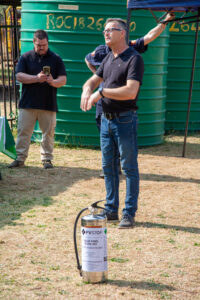
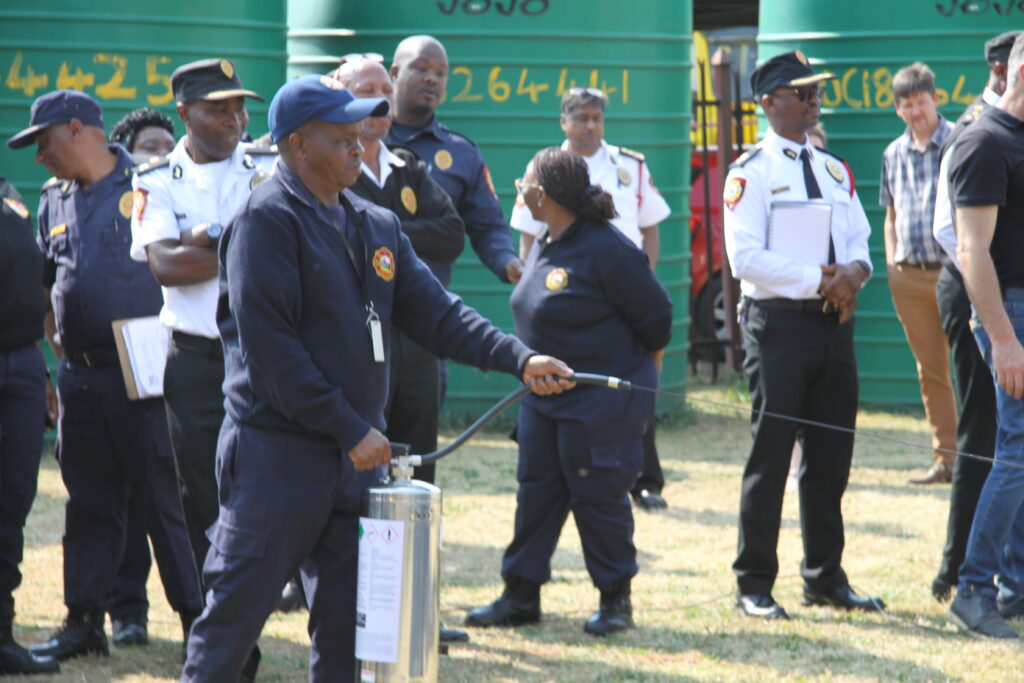
On Wednesday, 11 September 2025, Civitas Risk Control (Exclusive Operations Company) and LTV Technologies & Supplies (Exclusive South Africa Distributor) were proud to host a historic live demonstration of the PVStop® fire safety solution for the the City of Tshwane Emergency Services. Held at the Emergency Training Academy in Centurion, this was the first public deployment of PVStop on South African soil—and the results were both powerful and promising.

Real Voltage. Real Danger. Real Protection.

With the rise of solar PV installations across Gauteng and beyond, the safety of our first responders has never been more critical. PV panels continue to generate high-voltage DC electricity, posing a silent but serious hazard to firefighters.

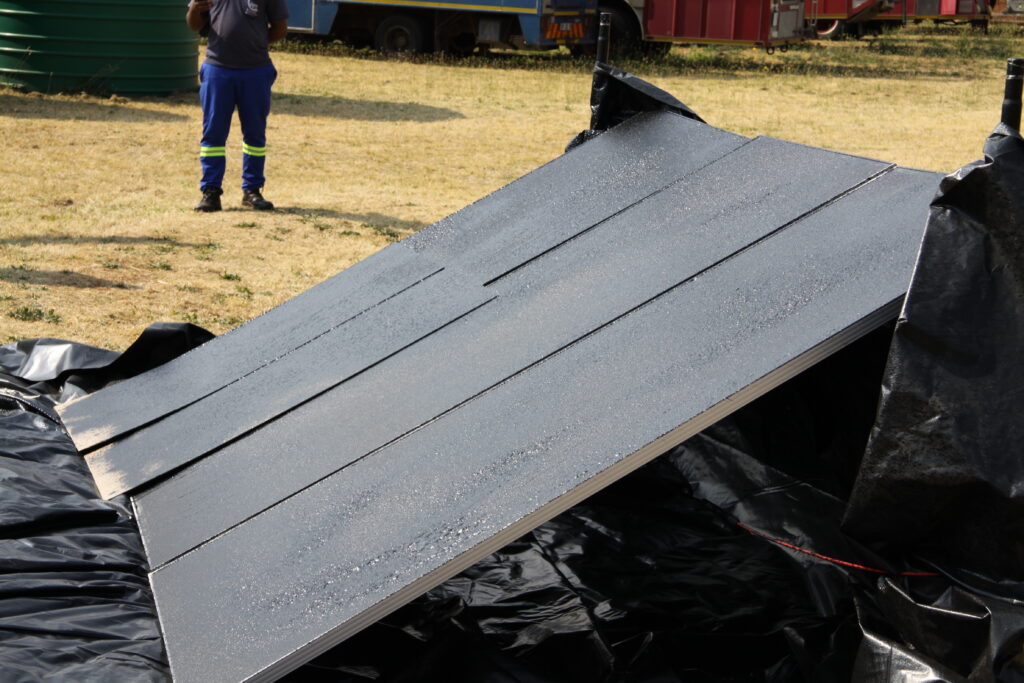
That’s where PVStop comes in: a light-blocking coating, patented spray-on solution that instantly de-energizes live solar panels, allowing rescue and suppression operations to proceed safely.

During the demonstration:

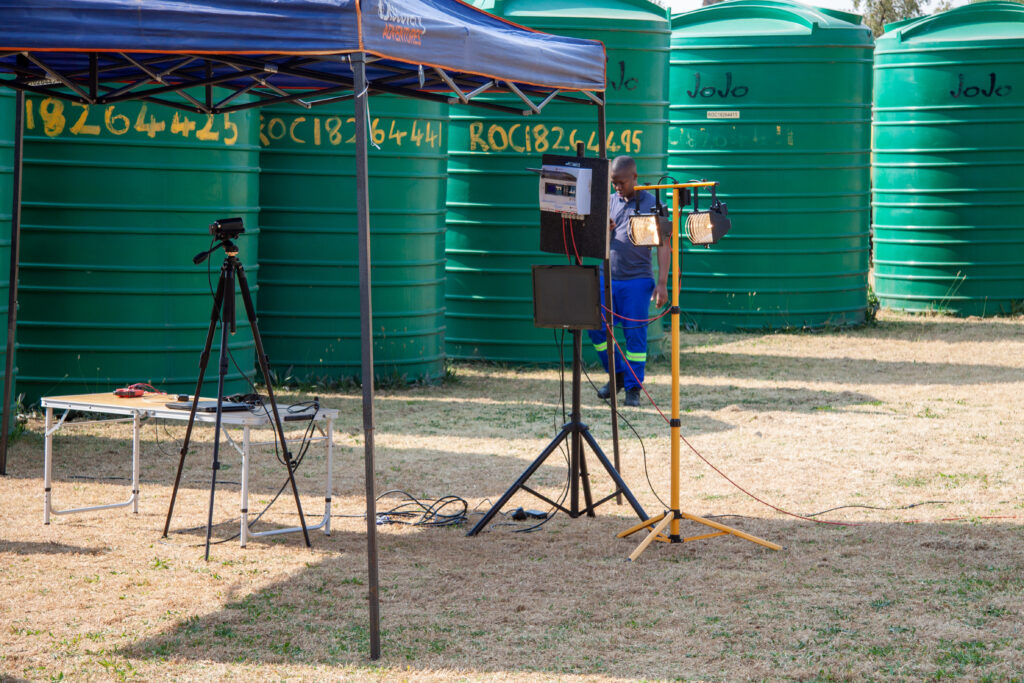
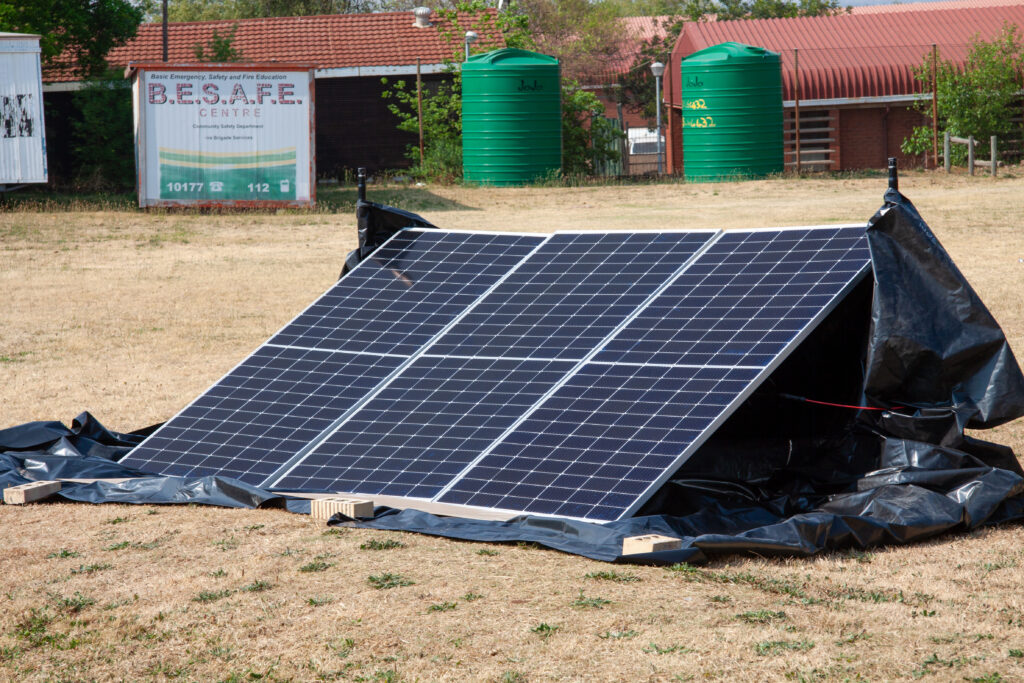
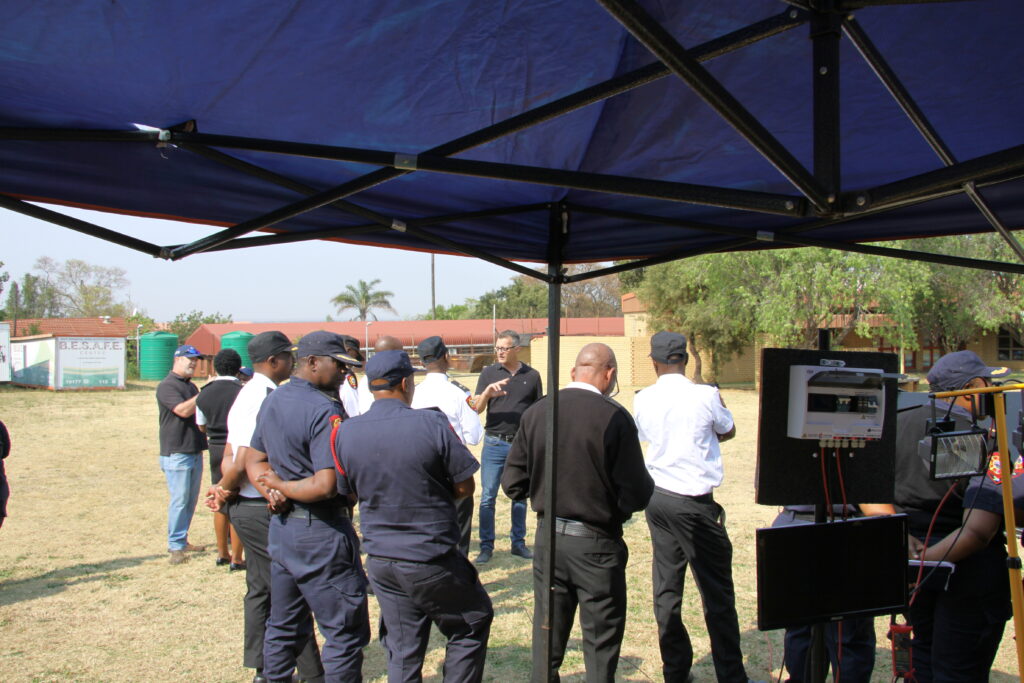
  • A test rig using three 455W solar panels in series was built to simulate live PV hazard conditions (~120V and 3A under moderate sunlight).
  • Halogen floodlights were used in parallel to visually confirm DC current flow.
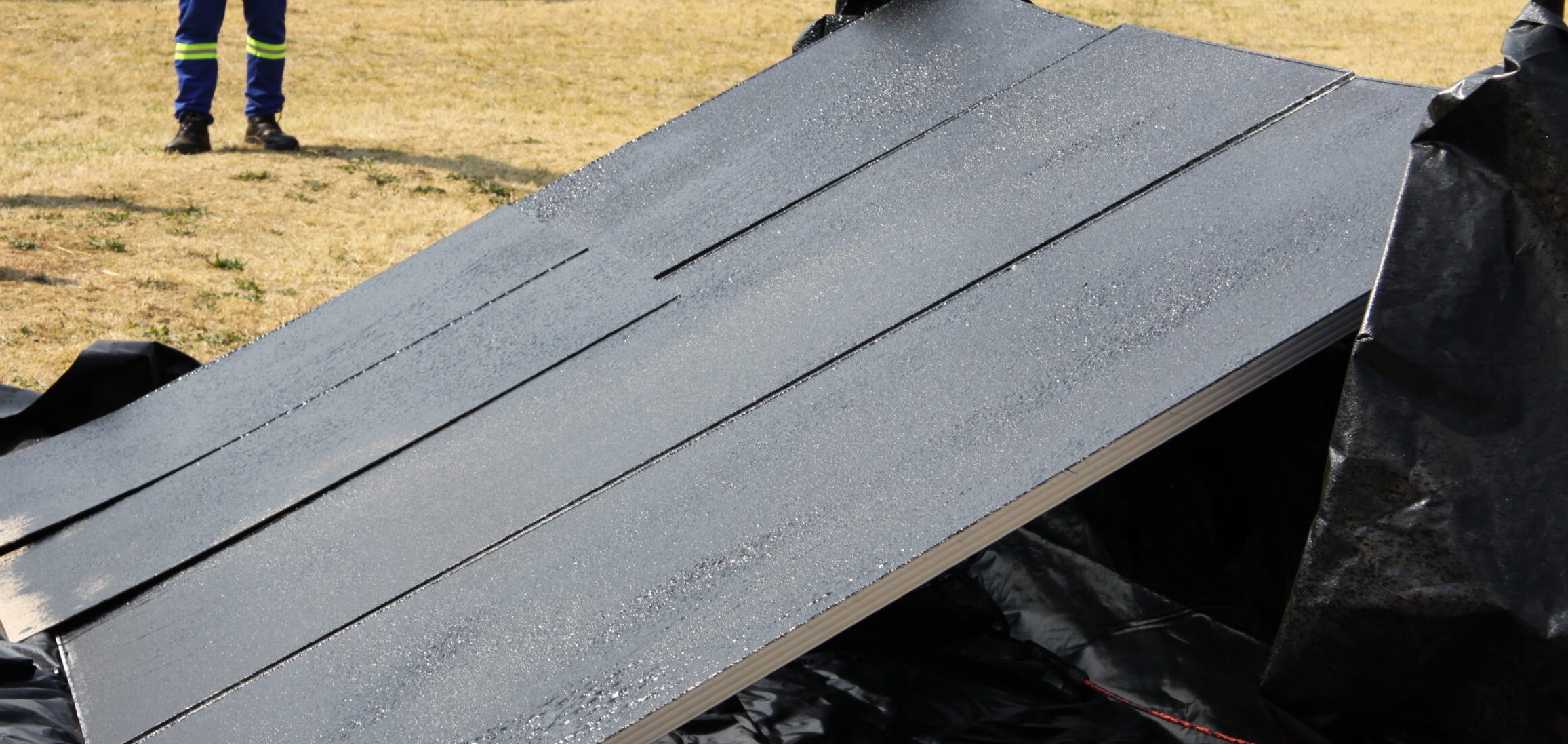
  • Upon application of PVStop by LTV Technologies and Supplies CEO Johan Bosman, the system instantly dropped in current, visibly dimming the lights.
  • A second application by a Tshwane firefighter reduced the current to just 0.07A, confirming complete and safe de-energization.

“It was amazing to see the current drop so fast. You could see the hazard disappear right before your eyes,” said one of the attending fire officials.

Built for Fire Services – Backed by Engineering

What made the demonstration especially impactful was not just the product’s performance, but its relevance to real-world operational risk. Attending fire officers and safety officials saw firsthand:

  • The speed of application (under 5 seconds)
  • The ease of use (no prior disconnection needed)
  • Fast drying time (under 2 minutes)
  • Simple cleanup with no long-term panel damage, simply peels of and disposed as general waste
  • And most importantly: immediate voltage and amps reduction

Also showcased were:

Building a Safer Future, Together

PVSTOP is more than just a product—it’s a life-saving technology, taken o market by our PVSTOP technical partners, that manages our strict compliance frameworks.

The demonstration was also the culmination of months of collaboration between:

  • LTV Technologies & Supplies (exclusive SA distributor)
  • SBD Business Systems (infrastructure and partner alignment)
  • Civitas Risk Control (operational entity managing technical partners, compliance, and logistics)
  • And PVStop International (the OEM and patent holder)

The event follows earlier training, webinars, PV Safety and Risk training sessions, and ongoing awareness-building.

Civitas Risk Control oversees partner training, deployment compliance, and product distribution in partnership with LTV Technologies & Supplies — the exclusive South African distributor of PVStop.

If you are:

  • A school or university administrator
  • A facility or operations manager
  • A safety officer at a hospital, clinic, or factory
  • A municipal or provincial risk manager
  • A commercial landlord or insurance provider

Reach out to our team. Let us help you make your PV installation safer.

PVStop is here.

PV Fires and the Case for Environmentally Responsibility
The Hidden Danger of PV Fires

PV Fires and the Case for Environmentally Responsible First Responder Solutions

As solar power continues to rise in popularity across South Africa and the world, so do the complex risks associated with photovoltaic (PV) systems—particularly during emergencies. While electrical safety and fire risks for first responders are well known, the environmental dangers of PV fires remain a largely overlooked issue.

In this article, we explore a critical yet under-discussed dimension: the release of hazardous nanoparticles and contaminants during PV fires, and how innovative tools like PVSTOP can help manage not only safety but also environmental cleanup.

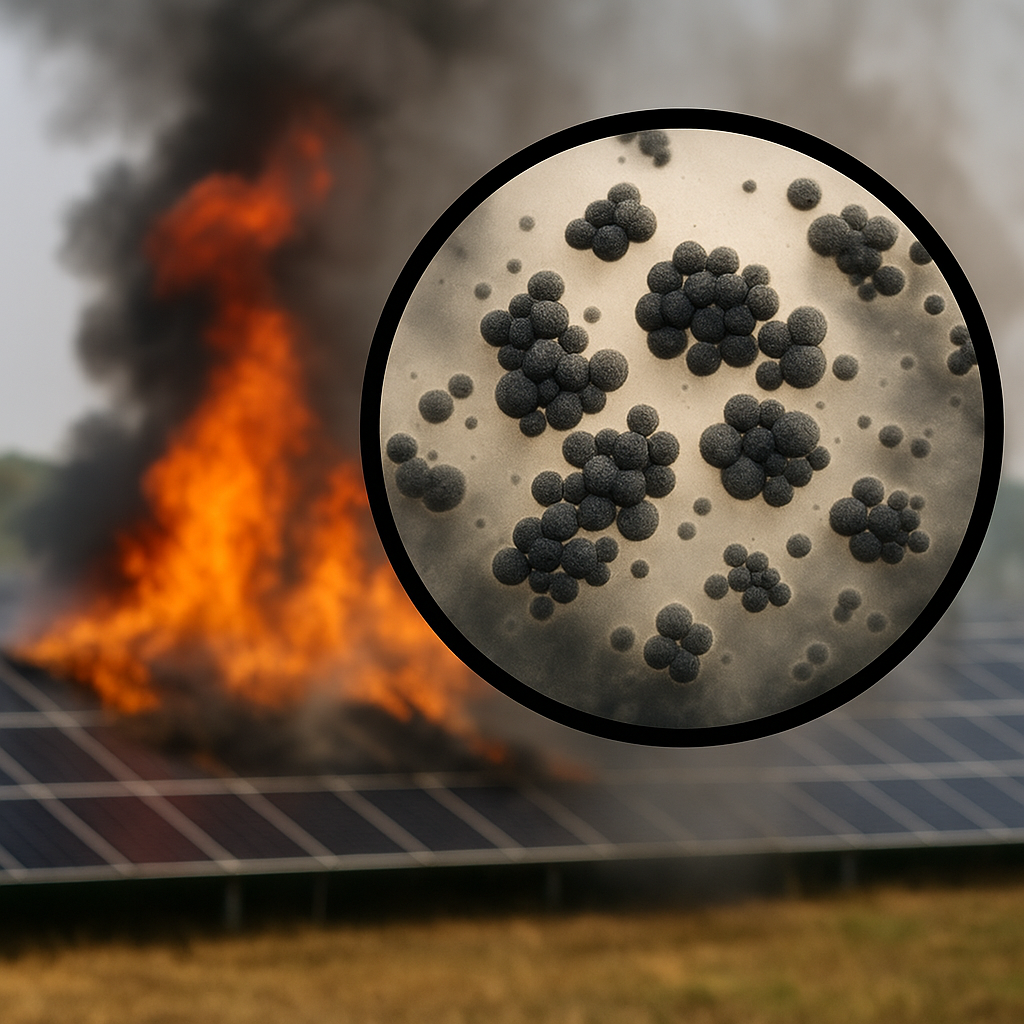
Nanoparticles from PV fires pose minimal risk in residential and substation systems, but commercial arrays may present higher health risks due to greater material volume and fire likelihood. To reduce exposure, residents within 1–2 km of a PV fire should be advised to remain indoors with windows closed until the area is declared safe by emergency authorities.

Why PV Fires Are an Environmental Threat

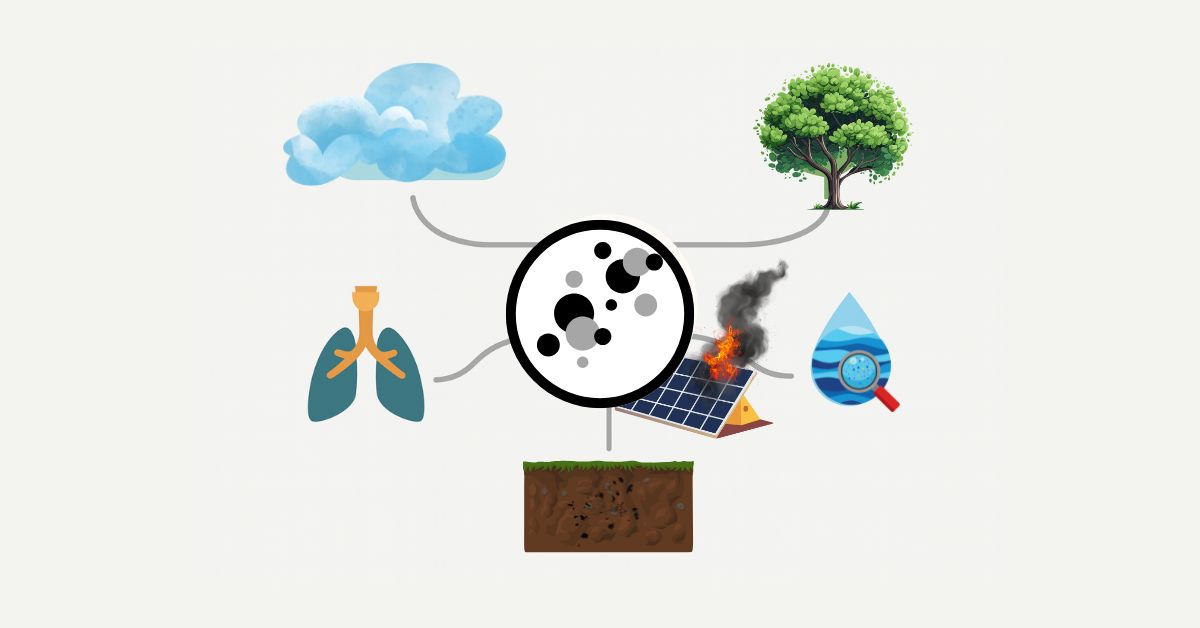
When PV modules catch fire, it’s not just the flames that pose a danger—it’s what’s released into the air, water, and soil.

Modern solar panels contain substances such as:

  • Heavy metals (lead, cadmium, antimony)
  • Silicon dust and nanoparticles
  • Plastic encapsulants and fluoropolymers

In a fire, these materials can degrade and release:

  • Toxic smoke and gases
  • Nanoparticles and fine dust
  • Contaminated water runoff from firefighting efforts

These substances pose serious environmental and health risks:

  • Airborne particles can cause long-term respiratory harm to responders, nearby residents, and animals. Read more …
  • Waterborne contaminants can infiltrate groundwater, rivers, or stormwater systems.
  • Soil contamination can linger, affecting ecosystems and future site usage.

Yet, current PV fire protocols often fail to address these environmental hazards in any structured way.

How Does PVSTOP Help?

While PVSTOP is not a fire extinguisher, it plays a critical role in post-fire safety and environmental containment. Once the fire is under control and it is safe to approach the site, PVSTOP can be applied to damaged or burned PV panels.

1. Post-Fire Encapsulation
Once the fire has been extinguished and the PV system is de-energized, PVSTOP can be sprayed onto affected panels. It forms a non-toxic, fire-retardant polymer film over the PV surface. This seals in residual contaminants, including toxic nanoparticles and heavy metals, limiting further environmental exposure.

2. Environmental Containment
By encapsulating the surface of burned or cracked PV modules, PVSTOP helps prevent the release of harmful particles into the air, water, or soil—making the site safer not just electrically, but environmentally.

3. Preparation for Clean-Up and Decommissioning
With the contaminated debris safely contained, the site can be assessed, repaired, or demolished. This enables a structured and compliant clean-up process, aligned with environmental safety best practices.

4. No Risk of Re-ignition
PVSTOP is certified non-flammable (tested to Class A fire standards) and eliminates the possibility of panels re-energizing during or after the fire, preventing re-ignition risks during recovery operations.

Why First Responders and Environmental Authorities Should Care

South African fire departments, insurers, municipalities, and disaster risk agencies are increasingly encountering PV fires in residential, commercial, and industrial settings.

Incorporating PVSTOP into post-incident procedures gives them the tools to:

  • Ensure full site de-energization
  • Contain hazardous particles before cleanup
  • Reduce environmental impact
  • Minimize risk to personnel, communities, and ecosystems

Environmental agencies should also begin recognizing PV fires as hazmat events that require proper reporting, containment, and remediation.

Call to Action: Safety is Not Enough—We Must Think Sustainably

The future of solar energy is bright—but it must also be safe and sustainable. It is no longer enough to think about electrical isolation alone. We must plan for holistic safety, which includes:

  • First responder protection
  • Electrical de-energization
  • Post-fire nanoparticle containment
  • Environmentally safe decommissioning

LTV Technologies and Supplies, we are proud to work alongside environmental experts, engineers, and first responders to develop new standards and tools for PV safety. PVSTOP being a key part of that strategy.

Final Thought

PVSTOP is not just a safety spray—it’s a bridge between emergency response and environmental responsibility. It allows us to respond to PV fires in a way that respects both human life and the ecosystems we seek to protect.

As solar continues to power our homes and businesses, let’s ensure that our response tools and protocols are as smart, safe, and sustainable as the energy we generate.

LTV Technologies Hosts Virtual Industry Webinar on Solar PV Safety and Compliance

Online Webinar Hosted from LTV Technologies and Supplies, Heilbron — April 24, 2025 — In a landmark virtual event, LTV Technologies & Supplies brought together top industry minds and safety advocates to explore urgent risks and overlooked regulations surrounding solar photovoltaic (PV) installations. The webinar, titled “Understanding PV Safety and Risks”, aimed to raise awareness and inspire action around fire safety, electrical risk mitigation, and regulatory compliance within the fast-growing solar sector.

The event was streamed live from Heilbron and recordings were made available to key industry invitees who could not attend. Participants joined from across a wide range of disciplines, including:

Emergency Services, Municipal Fire Departments, Engineers, PV System Installers, Battery Suppression Technology Providers, Professional Cleaning Services, Construction, Energy Specialists, and Technical Consultants.


Powerful Presentations from Global and Local Experts

The session featured two keynote presentations:

Alex Keene of PVStop International (UK) introduced the concept of the “DC Danger Zone”, explaining how solar panels continue producing high-voltage direct current (DC) even during damage or fire. Alex demonstrated how PVStop’s innovative removable water-based polymer light blocking coating is used globally by fire brigades to instantly make solar panels safe by blocking the light—from a safe distance of up to 10 meters.


Willem Beukes, a leading South African Structural and Fire Engineer from WIAM Consulting, outlined the current state of compliance with SANS 10400 regulations, detailing how most fixed PV installations are implemented without professional sign-off, risking fire propagation, structural overload, and dangerous live systems during emergencies.


A Clear Message: Solar Must Be Safe to Be Sustainable

“PV safety cannot be an afterthought. As South Africa moves toward energy independence, we must balance growth with responsibility,” said Johan Bosman, PV Safety Advocate and CEO of LTV Technologies. “This webinar was about educating and empowering every stakeholder—from the engineer to the cleaner to the end user.”

To honor their participation and commitment to safety, attendees received a ‘PV Safety Shield Award for attendance’, while the presenters were recognized with a ‘PV Safety Shield Award for Presentation’. Though not officially accredited, these awards reflect LTV’s commitment to recognizing shared learning and community engagement.


Next Steps: PV Safety Conference Announced

In light of the overwhelming response to the webinar, LTV Technologies is proud to announce its next initiative: a PV Safety, Risks & Maintenance Conference to be held in August 2025. The conference will include sponsor exhibitions, practical demonstrations, and panel discussions, with a strong focus on technical accuracy and safety innovation.

🗓️ Venue: To be confirmed — planned for Midrand or Johannesburg
💡 Sponsorship and Exhibition Opportunities Available
🎫 Limited Seating — Details to Follow


Supporting Material

  • Full recording of the webinar is available upon request.
  • Presentation content is included in the recording and will be made available to registered attendees.
  • Certificates: PV Safety Shield Awards for attendance and presenter contributions were issued by LTV Technologies.

About LTV Technologies & Supplies

LTV Technologies is a South African safety innovation company delivering cutting-edge solutions for renewable energy risk management, emergency response technologies, and AI-enhanced safety platforms. As a passionate advocate for safety in the solar energy sector, LTV leads initiatives to bridge the gap between installation growth and regulatory compliance.


Media Contact:

Johan Bosman (PV Safety Advocate)
Managing Director LTV Technologies & Supplies
📧 johan@ltvtech.co.za
🌐 www.ltvtech.co.za
📞 +27 083 469 6127


Relevant Tags:
#SolarSafety #PVRiskManagement #PVCompliance #SANS10400 #PVStop #LTVTech #FireRiskMitigation #EmergencyServices #SouthAfrica #SafetyFirst #EnergyFuture

Key Solar Safety Risks and Considerations
  1. Electrical Hazards:
    • PV arrays produce electricity whenever exposed to sunlight or artificial lighting.
    • DC cables, often rated up to 1500 VDC, can cause lethal electrocution and arc flash hazards.
  2. Fire and Evacuation Hazards:
    • PV systems installed on roofs complicate firefighting due to ongoing electrical production.
    • DC cables routed through escape routes increase the risk during evacuations.
    • Cutting energized DC cables during emergencies increases the risk of severe injury or electrocution.
  3. Accountability and Liability:
    • Ambiguity regarding who holds legal responsibility during PV-related incidents.
    • Potential liability extends to building owners, system installers, maintenance contractors, and even first responders.
    • Negligence cases could arise if proper procedures, training, or PPE are not provided.

PVStop Overview:

PVStop is a polymer-based fire-retardant coating specifically designed for PV (photovoltaic) systems. It rapidly blocks sunlight, eliminating electricity generation from PV panels during emergencies, thus mitigating electrocution risks and enabling safe intervention.

Product Composition & Safety:

  • Composition: Water-based, containing proprietary non-hazardous polymer resins.
  • Safety Profile:
    • Non-hazardous according to Regulation (EU) 2015/830.
    • Low environmental impact; miscible in water.
    • Non-toxic, non-irritating, no special hazards, safe for general handling​.

Advantages in Emergency Situations:

  • Immediate Isolation: Quickly eliminates electrical hazards by physically blocking sunlight from reaching the PV cells.
  • Non-Electrical Solution: Unlike electrical rapid-shutdown devices (“fireman switches”), it doesn’t require complex electrical connections (MC4 connectors), thus eliminating additional points of failure.
  • Improves Firefighter Safety: Allows firefighters to safely approach PV systems without risk of electrical shock.
  • Certified and Compliant: Holds relevant certifications, including the EU-Type Examination Certificate (CE 603059), confirming its suitability for professional firefighting use​.

Legal and Safety Considerations for South Africa:

From a legal perspective, recommending PVStop as part of the safety protocol has several benefits:

Emergency Protocol Simplification: Easily incorporated into standard operating procedures without specialized electrical training, simplifying compliance and training. Safeguard lives, protect property, and reduce legal risks associated with photovoltaic system emergencies.

Legal Clarity: Using PVStop as a standard practice clearly demonstrates proactive risk mitigation, meeting regulatory compliance under OHSA, fire safety laws, and standards.

Insurance and Liability: Reduces legal liability exposure, as its deployment represents a demonstrable effort to mitigate electrical hazards effectively and safely.

Understanding PV Safety and Risks – Webinar

Join us Free for an essential webinar tailored for professionals navigating the complexities of photovoltaic (PV) systems safety and risk management. This event is designed to provide insurance brokers, safety representatives, structural engineers, business owners, and fire chiefs with crucial insights into identifying and addressing the inherent risks associated with PV installations.

Key Highlights:

  • Understanding PV Risks: Uncover common and overlooked risks in PV systems, including fire hazards, electrical safety, and structural integrity.
  • Compliance and Standards: Dive into the latest guidelines and standards for PV safety, including the importance of the EGI Compliance Certificate.
  • Risk Mitigation Strategies: Learn from leading experts about effective strategies to mitigate risks and ensure system safety.
  • Interactive Q&A: Have your specific questions answered by our panel of experts in an engaging Q&A session.

Who Should Attend?

  • Insurance Brokers/Assessors: Understand the nuances of insuring PV systems.
  • Safety Representatives: Gain insights on enforcing safety protocols in PV installations.
  • Structural Engineers: Explore the structural challenges and solutions in PV system installations.
  • Business Owners: Learn the risks and safety requirements to protect your investments.
  • Fire Chiefs and Emergency Responders: Get equipped with knowledge to handle PV-related emergencies effectively.

Registration: Registration is open to all industry stakeholders interested in enhancing their understanding of PV safety and risk management. Sign up today to secure your spot and ensure you are up-to-date with the best practices in PV safety!

Eskom Compliance Recognizes PV Fire Risks

Eskom Compliance Update Recognizes Fire Risks in Solar Installations

The latest EGI Compliance Certificate (Rev 8) from Eskom marks a significant milestone for fire safety in the renewable energy sector. For years, industry experts, safety professionals, and insurers have raised concerns about fire hazards in solar installations, and now, Eskom’s compliance framework officially addresses these risks.

This update is particularly relevant for all Small-Scale Embedded Generators (SSEG), as compliance will soon become mandatory. By March 2026, all SSEGs must be registered for compliance or face potential penalties.

Eskom Compliance Update Recognizes Fire Risks in Solar Installations

The latest EGI Compliance Certificate (Rev 8) from Eskom marks a significant milestone for fire safety in the renewable energy sector. For years, industry experts, safety professionals, and insurers have raised concerns about fire hazards in solar installations, and now, Eskom’s compliance framework officially addresses these risks.

This update is particularly relevant for all Small-Scale Embedded Generators (SSEG), as compliance will soon become mandatory. By March 2026, all SSEGs must be registered for compliance or face potential penalties.

Understanding the New Fire & Fault Guidelines (Note 11, Page 8)

Eskom’s compliance update includes clear steps to reduce fire and fault risks in embedded generation systems. These include:

  • Electrical faults should never be extinguished with water. Using water on a live electrical system can cause electrocution and worsen the fire.
  • Generators must be isolated from the Eskom network before shutting down inverters and DC sources. This prevents electricity from flowing back into the system during an emergency.
  • Solar panels must be covered with fire-retardant material or an equivalent technique to prevent them from generating power during a fire or fault condition.

Why This Matters

For years, LTV Technologies & Supplies, as the South African distributor of PVStop, has been actively engaging with fire safety experts, insurers, renewable energy associations, installers, and safety representatives to address these risks. PVStop is the only solution designed specifically to stop solar panels from generating power instantly, making it an essential fire safety tool for solar installations.

With Eskom now recognizing fire and fault risks within its compliance framework, this is a step in the right direction. The focus is shifting from just installation compliance to also ensuring fire safety in PV systems, which will benefit homeowners, businesses, firefighters, and insurers.

Next Steps for Solar System Owners

  • Ensure compliance with Eskom’s new safety requirements before the 2026 deadline.
  • Review your fire safety measures for embedded generation systems, especially in solar installations.
  • Consider using PVStop, a globally recognized fire-retardant solution that instantly stops solar panel generation in emergencies.
  • Stay informed by connecting with LTV Technologies & Supplies or visiting the PVStop Informative Website for updates and solutions.

Conclusion

The recognition of fire risks in solar installations within Eskom’s compliance certificate is a significant moment for the industry. LTV Technologies & Supplies and PVStop remain committed to raising awareness, driving safety innovation, and providing solutions to ensure fire risks in solar energy systems are properly managed.

For more information, reach out to LTV Technologies & Supplies or your nearest PVStop reseller.